What partial restumping covers
Partial restumping replaces some of the stumps under a house and relevels the floor on the result. It covers the same work per stump as a full reblock, jacking, cutting out, digging, setting and packing, but only where the inspection says a stump has failed, and it still needs a building permit from a registered building surveyor, because replacing a footing is never exempt as repair under the Commission's practice note. It is priced per stump, and the permit and set-up cost are spread over fewer of them, so it only makes sense when the number of good stumps is large.
It is the wrong job for a house where most of the stumps are the same age and timber as the ones that have gone. Those will follow. The full reblock page explains when the whole house is the answer.
When a partial job is the right call
- The house was reblocked once already. Concrete stumps from the 1980s under most of the house, and a laundry or sleep-out added later on its own timber stumps that have now rotted.
- One wet corner. The bathroom and kitchen side of an old Drouin weatherboard, where a leaking shower or a downpipe has rotted six stumps and the rest of the house is dry and sound.
- Termite damage in one area. Galleries in a run of stumps near where the nest was, with the rest clean on inspection.
- A verandah or a chimney base. Verandah posts on short stumps and the heavier stumps under a chimney hearth fail first and can be done on their own.
- A building report with a short list. A pre-purchase inspection on a house in Trafalgar that names four stumps. If the rest of the subfloor passed, four is the job.
Choosing the replacement stump
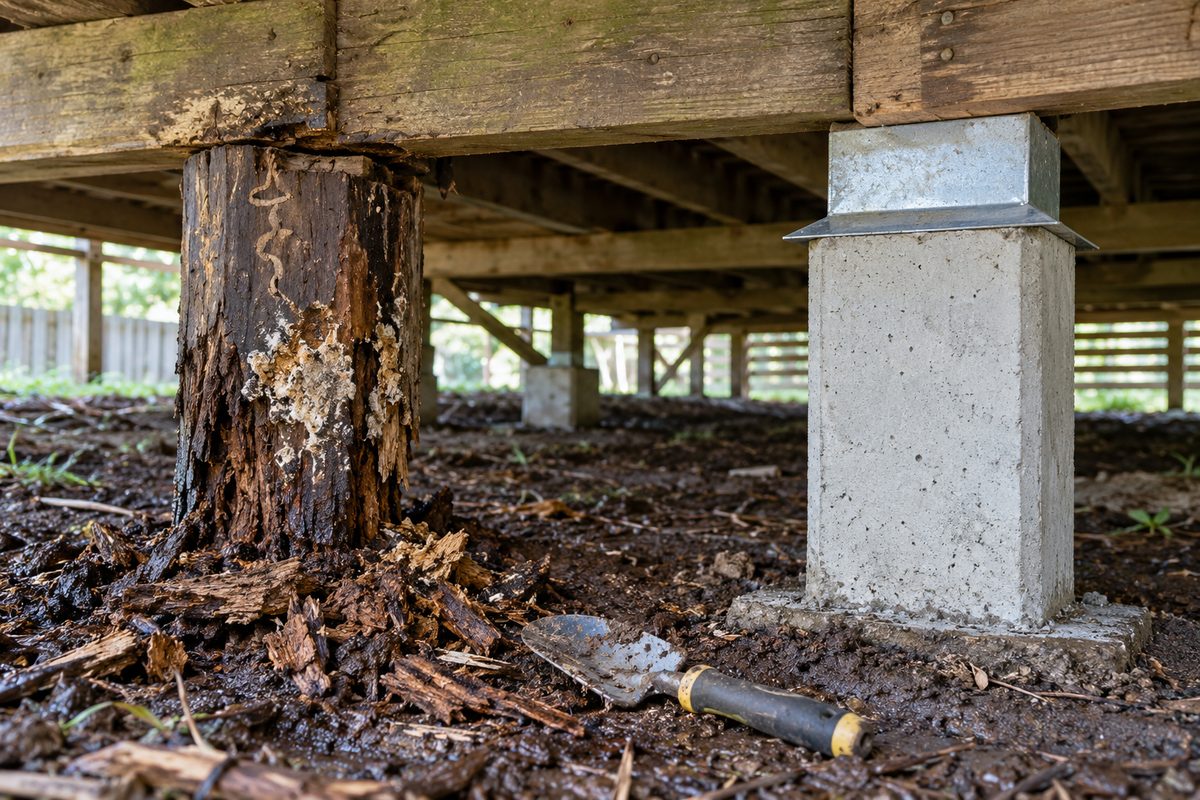
The new stump does not have to match the old ones. A timber stump that has rotted in acid red soil after sixty years is replaced with precast concrete or hot-dip galvanised steel, not with more timber. Where the house already sits on concrete, concrete matches. Where the corner being done is the one that keeps moving on reactive clay, an adjustable steel stump there lets it be relevelled later without another dig. The stump types page goes through it.
How the work runs
- Inspection. Every stump is probed, not just the ones on the report, because the cheapest time to find the next rotten one is while the crew is already under the house.
- Quote. The number of stumps named, the type, the depth, relevelling of the affected bearers, ant caps, and what happens if a bearer above a stump is found soft.
- Permit. Building permit from a private registered building surveyor. A council asset protection permit if materials or spoil cross the nature strip.
- Replace. Jacks take the load either side, the old stump is cut out, the new hole goes to firm ground below the wet layer, the new stump is set plumb with its ant cap, backfilled and rammed, and the bearer is packed level to the rest of the house.
- Sign-off. The surveyor inspects and the permit is closed.
What West Gippsland adds
On a wet block the stumps that fail first are the ones on the downhill side and under the wet areas, so the partial job is usually one side of the house. Doing that side without fixing where the water comes from means doing it again. Regrading the ground under the house and adding vents along the wet side is part of a partial restump here, not an extra. The whole shire being deemed termite prone means ant caps go on the new stumps and the bearers nearby get a second look.
What partial restumping cannot fix
It cannot make the remaining old stumps younger. If they are the same timber in the same ground, they are on the same clock. It cannot level a floor evenly if the untouched stumps have sunk at different rates; the relevel is limited to the bearers being worked. And it cannot be done without a permit because the number is small; replacing one footing is permitted building work in Victoria the same as replacing fifty.
Check the current rules before you rely on this
This page describes partial restumping and stump replacement in Baw Baw Shire. It describes the rules in general terms as they stood in October 2026. Standards, forms, thresholds and fines change.
The authoritative sources are Building and Plumbing Commission practice note BP-01, when is a building permit required, Building and Plumbing Commission (as the VBA) on registration being required for restumping and reblocking at any value, Baw Baw Shire Council on building permits and Baw Baw Shire Council on asset protection, nature strips and road reserves. Where anything here differs from those sources, they are right and we are not.
We are not building surveyors, engineers, planners or lawyers. For what applies to your house, ask a registered building surveyor or ring Baw Baw Shire Council on 03 5624 2411.
Accurate at the time of writing, October 2026. Always check the source before relying on it.