What relevelling is
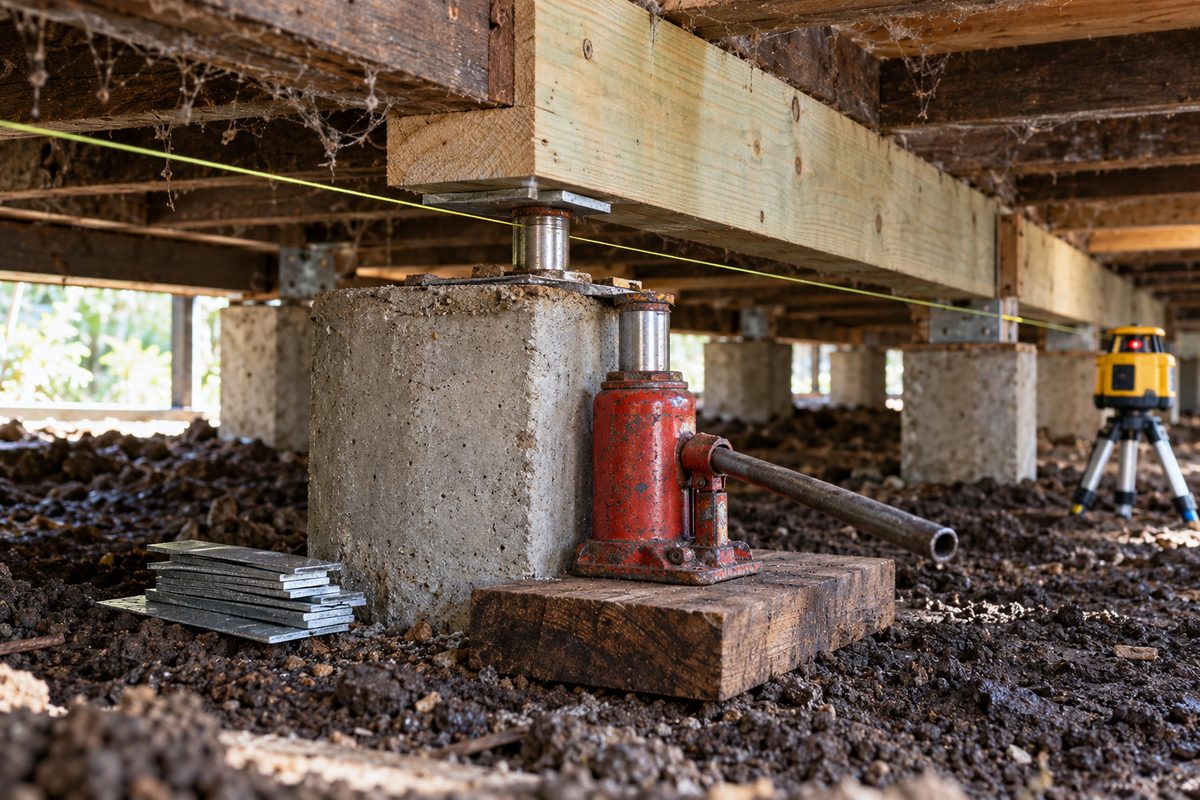
Relevelling lifts a house that has sagged and holds it level without replacing the stumps. Jacks go under the bearers, the low points are raised a few millimetres at a time to a laser line, and the gap between the stump and the bearer is taken up with galvanised steel packers or, on adjustable steel stumps, by winding the head. It is sometimes called jack and pack. It suits a house whose stumps have settled into the ground, or been packed badly in the past, but are themselves sound. It does not suit a house whose stumps have rotted, because a rotten stump cannot be packed, it has to be replaced.
The inspection decides which it is. A stump that is plumb, solid under a probe and dry at the ground line can be relevelled on. One that is soft, hollow, leaning, or sitting in water is a replacement. On most old West Gippsland houses the answer is some of each, and the quote lists which stumps are which.
When relevelling is the right job
| What the inspection finds | What that means |
|---|---|
| Stumps sound, bearers sound, floor out of level by 20 to 40 mm | Relevel. Jack and pack, a day or two, no digging. |
| Stumps sound, a few bearers rotted at the ends | Relevel plus bearer repair. The floor comes up where the bearer is replaced. |
| Some stumps rotted, most sound | Partial restump of the failed ones, relevel the rest. One permit. |
| Most stumps rotted or sitting in water | Full reblock. Relevelling on rotten stumps buys a winter, no more. |
| Concrete stumps that have sunk unevenly in wet clay | Relevel, then look hard at the drainage. If the ground keeps moving, adjustable steel on the worst corner. |
How the work runs
- Levels. A laser level or a water level is run through the house and under it. The high point is found, the low points are measured against it, and the pattern tells the story: one corner down is one stump, a whole side down is drainage, a dip in the middle is a bearer.
- Jacking. Hydraulic bottle jacks on hardwood pads go under the bearers near the low stumps. The house comes up in small lifts, checked against the laser each time, so plaster, cornices and brickwork are not shocked.
- Packing. The gap between the top of the stump and the bearer is filled with galvanised steel packers, bedded flat. Timber wedges are not used; they crush and the floor drops again. On adjustable steel stumps the head is wound up instead.
- Doors and cracks. As the floor comes level, doors that were trimmed to a sagging frame can bind and cracks can shift. Some close. The ones that do not are patched afterwards.
- Drainage. If the stumps sank because the ground under the house stays wet, the ground is regraded and vents added, otherwise the relevel is temporary.
What West Gippsland adds
Clay that breathes. On the flats around Drouin, Yarragon and Darnum the ground can swell in a wet winter and shrink in a dry summer. A house relevelled in March can be out again by October if the stumps are in the moving layer. Where that is the pattern, the long-term answer is deeper stumps, adjustable steel on the worst corners, or both, and the relevel is the first step rather than the last.
Settled, not rotten. On the deep red soils of the hills, concrete stumps set shallow sometimes simply sink. The timber is fine, the stump is fine, it is just lower than it was. That is the ideal relevel: jack, pack, done.
Previous packing. Many railway-era houses have been relevelled two or three times over a century, with whatever was to hand: timber offcuts, bricks, slate. The inspection finds the packing before the jacks go in, because a stack of loose brick under a bearer is not something to lift against.
Does relevelling need a permit?
If no stump or footing is replaced and no structural element is altered, relevelling may fall within the repair and maintenance exemption in the Commission's permit practice note, provided it does not adversely affect the structural soundness of the building. The moment a stump comes out or a bearer is cut, the exemption ends and a building permit is needed. A registered building surveyor makes that call, and a registered builder should still do the work: the Commission requires registration for restumping and reblocking regardless of value, and relevelling is done by the same trade with the same jacks.
What relevelling cannot fix
Relevelling cannot make a rotten stump sound; it can only sit a bearer on top of it for a while. It cannot stop clay moving, so on reactive ground it needs drainage or adjustable stumps behind it to last. It cannot square a door frame that was racked when the house dropped; a carpenter does that after the floor is level. And it cannot fix a brick veneer on a strip footing, which is underpinning and an engineer.
Check the current rules before you rely on this
This page describes house relevelling on existing stumps in Baw Baw Shire and when it crosses into permitted building work. It describes the rules in general terms as they stood in October 2026. Standards, forms, thresholds and fines change.
The authoritative sources are Building and Plumbing Commission practice note BP-01, when is a building permit required, Building and Plumbing Commission (as the VBA) on registration being required for restumping and reblocking at any value and Building and Plumbing Commission find and check a practitioner. Where anything here differs from those sources, they are right and we are not.
We are not building surveyors, engineers, planners or lawyers. For what applies to your house, ask a registered building surveyor or ring Baw Baw Shire Council on 03 5624 2411.
Accurate at the time of writing, October 2026. Always check the source before relying on it.